How Climate and Sustainability are Impacting Real Estate in Canada
What REALTORS® are hearing, and not hearing, from their clients.

REALTORS® are noticing an increase in awareness around climate change from clients and fielding more questions about flood risks, wildfire zones and extreme heat.
Buyers are concerned about a prospective property’s long-term resilience in areas more prone to extreme weather events linked to climate change, as well as the possible effect on insurance costs. Sellers want to make sure they aren’t hiding any vulnerabilities concerning a property that might jeopardize a deal.
In July 2023, a devastating wildfire tore through multiple communities near Shuswap Lake in British Columbia, and Century 21 Lakeside Realty’s Scotch Creek office was right in its path. No one was injured, but the office was lost along with more than a hundred structures in the area.
“We got the phone call that the fire was coming down the hill and we had to get moving immediately,” says owner and REALTOR®, Kevin Campbell. “We didn’t have time to get into the office and take anything out. It got dangerously windy, the evacuation order came in and everybody ran. In a matter of minutes, the office was gone.”
The people at the brokerage found a temporary office to keep business moving.
In a matter of minutes, the office was gone.”
Kevin Campbell, REALTOR®
Century 21 Lakeside Realty has been part of Century 21 Canada since 1976, one of the first to join the then-new franchise model. After months of rebuilding, the brokerage opened the doors to a new, fully rebuilt office location in August 2024.
“It was a lot of ‘hurry up and wait’,” says Campbell. “But we’re in a fully new and improved building, and we’re proud as punch. We have a great location on the main drag, our signage is up and it looks better than anything else. You know, we’ve been here for 40 years, so we’re happy with how it’s all turned out.”
“There were residents doing everything they could to help the firefighters, and it’s unbelievable how everything has been cleaned and rebuilt in just a couple of years. To see everyone pull together, it puts a lump in your throat.”
As a part of the Canadian Real Estate Association (CREA) national disaster relief campaigns, REALTORS® and their networks raised $338,731 in 2023 to support communities affected by the British Columbia wildfires that impacted Campbell and his office.
CREA National Disaster Relief Campaigns
The REALTOR® community has demonstrated their willingness to come together and raise funds for those impacted by large-scale disasters, time and time again. Since 2010, REALTORS® across Canada have collectively helped raise more than $2.6 million via the Canadian Red Cross. In addition to event-specific campaigns, CREA also has REALTORS Care® donation portals open to contributions for these other Canadian Red Cross appeals:
Such events are becoming increasingly common and being covered in the news and on social media, and as changing climate conditions become viewed as our new reality, they’re being addressed more frequently in real estate transactions.
Ryan Hartlen, a broker and REALTOR® with RE/MAX Nova in Dartmouth, Nova Scotia, says he’s seeing climate change become an active part of real estate conversations, especially around flooding and fire risks.
“Clients are proactively considering flood zones, forest fire risk, evacuation routes, insurance cost, water reliability and practical features like pools and A/C for hotter weather,” says Hartlen. The role of a REALTOR® is to provide full disclosure and transparency, sharing research and environmental risk insights so clients can make informed decisions, he adds.
Clients are proactively considering flood zones, forest fire risk, evacuation routes, insurance cost, water reliability and practical features like pools and A/C for hotter weather.”
Ryan Hartlen, REALTOR®
Another Dartmouth sales representative and REALTOR®, Peggy Jensen, from Century 21 Trident Realty, says she has been noticing more comments and questions from clients as well.
“More buyers are aware of climate change when purchasing homes in Nova Scotia,” she says. “People are also more aware when building new homes. I’m asked more often now, ‘How far is the home/land above sea level?’ Homeowners have often taken steps to prevent flooding and erosion from rising tides. We are seeing more metal roofs now, which handle stronger winds, especially during hurricanes.”
Jensen says she often refers to the coastal hazard map tool, which was launched by the province of Nova Scotia in 2024—it shows areas with possible flooding risks until the year 2100. She also refers to the HRM Flood Map for buyers looking in the Halifax Regional Municipality area.
“I've heard comments from buyers that they would prefer a water view versus being right on the water or at least set back from the water a good distance,” she says.
In a country as vast as Canada, there are decidedly significant regional variations, with climate impacts and climate awareness appearing more pronounced in some areas than others.
Gordon Breau, a broker and REALTOR® at RE/MAX Professionals in Saint John, New Brunswick, says his region is considered “luckier” than cities on the west coast, which face greater risks from wildfires and heat waves, and concerns about climate change are not top of mind for his clients. Similarly, in Canmore, Alberta, Richard Greaves, broker of record and REALTOR® with RE/MAX Alpine Realty, reports little or no client concern so far.
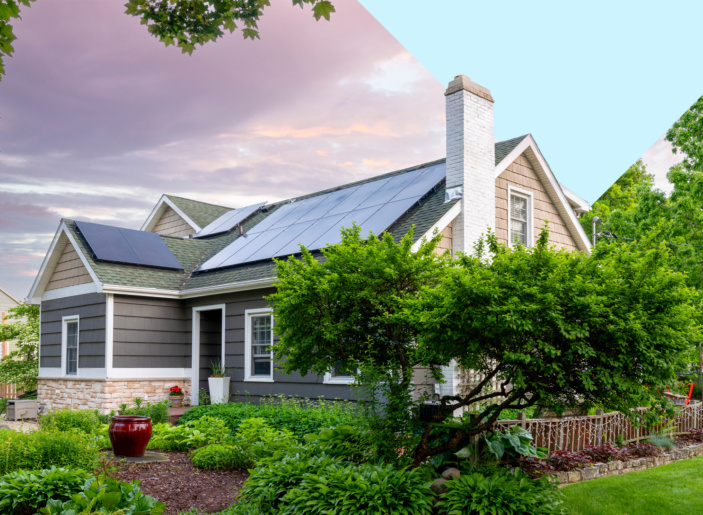
In Ontario, Cailey Heaps, president, CEO, broker of record and REALTOR® for Heaps Estrin in Toronto says she rarely gets questions directly relating to climate change from clients, but when she does, they are mostly concerns about flooding or green initiatives within the home, such as solar panels.
“Buyers are prioritizing homes with upgraded drainage, sump pumps and efficient mechanicals,” she says. “Solar and EV charging come up more often now, and there’s growing interest in sustainably built or renovated homes with lower environmental impact.”
Solar and EV charging come up more often now, and there’s growing interest in sustainably built or renovated homes with lower environmental impact.”
Cailey Heaps, REALTOR®
“We help clients assess risk early, especially in older homes or properties in areas with known drainage issues. Our extended network of inspectors and trades [people] provides guidance on improvements like waterproofing, backup systems and smart home integrations that enhance both function and sustainability. We also have great relationships with many contractors, most of whom have expertise in green initiatives.”
While no REALTOR® can prevent disaster, an opportunity exists to further knowledge about climate impacts and sustainable features increasingly being included in homes. If you’re experiencing increased queries from your clients about climate and sustainability, we encourage you to let us know in the comments.
Canadian Certified Green Representative (CCGR) Certification
Interested in learning more about becoming a sustainability expert? The Canadian Real Estate Association (CREA) launched the Canadian Certified Green Representative (CCGR) certification in 2025. Broken down into four e-learning modules and a final online assessment, the CCGR certification covers a variety of topics including climate change and environmental hazards, high-performance homes, renewable energy and electrifying homes, and environmental practices. Register by December 31, 2025, and save 20% on the full four-module learning plan, including the final assessment. Enrol on the CREA Learning Hub.