
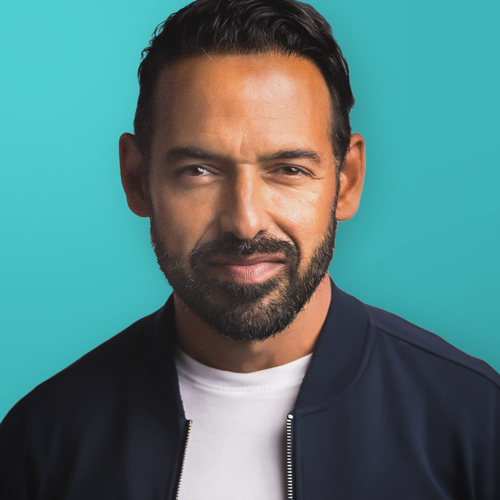
Shaun Majumder

Episode 79/October 2026
How to Hit a Home Run: The Power of Teamwork and Embracing Roadblocks
SUBSCRIBE





The real estate industry moves quickly. Between shifting markets, changing buyer behaviours and competing priorities, there’s a lot to juggle on your own. Surrounding yourself with a strong team of people you trust, knowing when to pass the ball and keeping a positive outlook can make all the difference on your roadmap to success.
Former Team Canada baseball players and The Amazing Race Canada duo Michael Crouse and Tyson Gillies know the value of teamwork in high-pressure situations. They join this episode of REAL TIME to share how trust, teamwork and a positive mindset have helped them navigate challenges and find success on and off the field.
Listen on your favourite podcast app
Episode Transcript
Michael Crouse: Even when you do fail, I think failure is part of success, and you have to understand that failure, because that's what makes you become that veteran or that leader in the clubhouse or in real estate or in that field.
Shaun Majumder: Were they all in lederhosen?
Michael: Yes, I think some were.
Tyson Gillies: Some of them. They are all in the…
Michael: Some were.
Shaun: In an industry where people spend a lot of time working alone, having a team of players to lean on can be incredibly beneficial. Today we're talking to two people who know a lot about resiliency, teamwork, so much so that they actually started a company together. Tyson Gillies and Michael Crouse. They're two former Team Canada pro baseball players and also former contestants on The Amazing Race Canada. Now they co-own an amazing company called T21 Performance, coaching young, awesome, up-and-coming athletes to be future baseball stars.
We go through the gamut. We talk about resiliency. We talk about teamwork. We get some really cool stories about what their experience was like on The Amazing Race Canada, where they made it to the last challenge, and they didn't make it through. You talk about resiliency there. They've got some amazing stories. You're going to be inspired. You're going to laugh. It's a great episode. Here we go. Check it out. Tyson Gillies and Michael Crouse here on REAL TIME.
I'm really excited to talk to you guys because I think teamwork is one of those things that, in the world of social media and everybody being isolated and in their own little silos, I think people need more teamwork, generally speaking, whether it be political, whether it be just social. First of all, I want to know who you are. Tell us a bit about who you are. I'm stoked. Tyson and Michael, you have an interesting background. Why don't we start with Tyson and then Michael? Then how did you guys come together to be friends and now business owners?
Tyson: Actually, we both had the background of growing up in British Columbia and playing in the Premier Baseball League. It's such a small world for baseball, British Columbia, Canada, actually. We knew who each other were, but we didn't actually finally meet until I was with the Phillies in Clearwater, Florida, and Mike was with the Blue Jays in Dunedin, Florida. I ended up changing actual baseball agencies and joined his agency.
We started training together in the off-seasons in Tampa Bay, where we'd stay there under the nice sunshine and just around the camaraderie of all athletes. We spent our off-seasons there. Before you know it, him and I just started hanging out. What was it? It was just basically the Derek Jeter and Michael Jordan's birthday party where we actually really met. Weirdly enough, Mike and I were the last ones standing.
Shaun: That's amazing.
Tyson: It's the same story as it is now, this many years later. Actually, we both would come home, and we would have our own little clients on the side, and we would train them. One day, Mike was working out over in Olympic Village area. I guess there was a gym that he used to work out at. They were looking at a new space, and he texted me up. He's like, "Hey, do you want to go check out this space tomorrow?" I was like, "Yes, sure."
Funny enough, the greatest part of that story, and how it began, was we basically sat there in a meeting, trying to pitch this training company to put a baseball facility in an empty space there. We were just looking for employment. Before you know it, they looked to us, and they said, "Hey, so what's your business called?" Him and I look at each other; we're just like, "Don't say anything. We'll figure this out outside."
Tyson: We walk outside, and then him and I just look at each other and say, "Hey, did we just start a business?" Then before you know it, we got incorporated within the next couple of weeks, and here we are seven years later.
Shaun: Oh, dude, that's very peanut butter chocolate moment. Like, "Wait a minute." All it was, you guys were just reaching out, you knew this space was available. Michael, did you know right away? First of all, how long have you known each other? I know you were in the Premier League. How old were you when you first either faced off against each other, played against each other, eyeballed each other going, "Yes, he's good. No, he's good. Okay, I got to watch out for each other." What age?
Michael: I'm two years younger than Tyce. In Baseball Canada, they start selecting guys for Team Canada at around 16; if you're really, really good, at 15. About 16, 17, you start to see the older guys start to get selected for these rosters. You hear a name. Tyson Gillies is the name. He's going to get drafted. I get to Team Canada, but he's already out of the system. You hear about each other then. Never really played against each other in the PBL.
Then I think it was around when we were about 19 or 20 years old, we came back. We shared the same off-season back in Vancouver, and that's how we connected. Then, yes, just flew off from there. Same agency, same trainers in Florida, same off-seasons, same mindset, same friends in Tampa. Then, yes, we got that--
Shaun: Same country of origin?
Michael: Same country of origin. Same league coming up. You have a lot of the same origins that you share, and so it's easy to get along with a person like that.
Shaun: Now, back in the day, were you guys outliers within your community at the age of 15, 16? Did you know that you were elite back then? Obviously you were, but what I'm getting to here is like minds attract; they find a way; they get above the fray. Were you two peas in a pod that was filled with a bunch of other people that were similar, or were you guys like, "Oh, yes, we're going outside now, we're aiming for the stars"?
Not to say that you're leaving other people behind, but you know what I'm talking about. In that rise in the athletic world, the cream rises.
Michael: I think, for me, at the age of six is when I put on my first vision board that I wanted to be a professional football player. My dad came from NFL and the CFL, and he actually ended up coaching all of my sports. That mindset, that triggered in me and then all my friends group. Beyond the sports itself, it was pick up basketball, it was skateboarding, it was building forts, it was sleepovers, computer games. Everything was competitive in that range.
I think that triggered my mindset to want to be on all the all-star teams or be the best that I could be, be the leader on the field. Next thing you know, you just wake up, and there's scouts watching your game, and you don't even know where this came from. You're 14, 15 years old, and you're like, "Hey, you made Team BC," and you're like, "What is that?" Then you see a scout, and you're like, "What does that mean?" Then Team Canada, and then next thing you know, you look at yourself, and you're like, "Holy shoot, this could be a reality soon." Yes, I think it starts when you're younger. You just really don't really know that it's already started that young.
Shaun: What about you, Tyce?
Tyson: Honestly, for me, I would say it was a little bit older. I was probably 15, and I was playing hockey competitively, and that's what I wanted to do for a living. One day, it was a Friday night baseball practice in Kamloops. One of the coaches posted this flyer saying if you wanted to do an open tryout for the Langley Blaze. My dad's like, "Do you want to go?" It was the next morning, first thing in the morning.
We got up four or five o'clock in the morning just to make that open tryout. I walked on. They asked me if I wanted to go play there next year. I packed my bags, and I started out when I was 15 years old and living out of a suitcase for the next—what was it?—16, 17, 18 years after that.
Shaun: Oh, my God. You were all about the hockey, though. Your balance, your muscle memory, everything was hockey, hockey, hockey. Then baseball, what was that transition like, coming from hockey to baseball?
Tyson: The transition was basically for my parents. I was like, "I'm way too high-energetic for the guy." I was like, "We need to tire him out." They threw me into baseball for something to do and to get me out of the house, waiting around for hockey season. The transition of the game was a little bit different. The way I am is I'm a very big physicality kind of guy. Baseball, if I wasn't going 120 miles an hour on the field, then it wasn't very exciting for me.
Shaun: Yes, man, but that's still-- I love that. If you compare the two games-- Mike, did you also play hockey?
Michael: I played every sport except hockey. Hockey was not a sport that I got brought up in.
Shaun: You played basketball?
Michael: Basketball, football, track, soccer, everything under the sun, yes.
Shaun: That team sensibility. Obviously, baseball is a team sport, but it is different than, say, soccer or different than, say, basketball, where every play is tied to a touch of a ball, and you're all connected, you're tied every single play, whereas baseball is a little different. Talk to me a bit about the mindset of the individuality versus you cannot exist on a team without being a team player when you're playing basketball or soccer. In baseball, it's you. Obviously, you contribute to the team. Is there a difference in that mindset in your mind? Talk to me a bit about that.
Michael: Baseball is tricky because it's an individual sport that's on a team. When you're hitting, you're by yourself in the box. If you suck that day and you go 0 for 4 and you swing at 4 sliders in the dirt, it's only you that can battle through that. Your teammate, as much as he can go get a hit behind you, you have to be able to battle through that mentally. I think baseball, when you go bad, which you do go bad a lot because you fail—Hall of Famers succeed 30% of the time, and they fail 70% of the time.
When you do fail, and you go back into the locker room, you get to really see the guys to see how they act, if they are going to be that bad teammate because they are 0 for 8, or if they're going to be that neutral and good teammate, even though they're sucking. You get the opportunity to mesh with your teammates that way and pick each other up that way. Then the opposite can be said for when you're going good. Are you going to be that guy that just bloats around the locker room and if someone's going bad, you tear him down, or are you going to help pick the person that's failing?
You get to experience both sides of the matter on an everyday scale. I think, from a team standpoint, that's where you get the benefits from.
Shaun: Yes. What about you, Tyce? What's your feeling about team baseball and individual basketball?
Shaun: Or hockey, I guess.
Tyson: Reiterating what Michael said about how it's the most individualized team sport ever, but at the same time, once you started to grow in the game and you started to learn, just how contagious it is to root for the guys beside you. When you're in college, and you're beginning in Rookie ball and Low-A and short season and levels like that, it's just like you're trying to compete with that right-fielder, that left-fielder beside you so much, and that you don't want them to get on base. It's hard when you're young to not have that mindset.
Once you start getting older, it's like, "I want him on base. I want to create more holes on the field. I want my RBIs." Why would you ever root for somebody's downfall? Once you start having that mindset, it picked everybody up. You start to realize that, yes, you want to make being with the Mariners or the Blue Jays or the Padres, but at the same time, it's just like you want to win a job with 29 other organizations, not just your own. You start to have that, and you start to cater to more of that mindset. Honestly, I think it starts to create more positives than anything.
Shaun: Yes, I was going to say, it sounds like baseball team mentality, there's a bit more resistance to the obvious, like in basketball, in volleyball, all these sports where you are so connected to the other person that baseball, you really need to almost manifest the idea of, "We are a unit, we are a team, we are cohesive, we must act that way and feel that way and support each other that way." It's almost like if you can get to that mindset on an individualized team sport like baseball, that just elevates so many things in your life as well, I would assume.
Tyson: Oh, absolutely.
Michael: Yes, it's a dangerous characteristic if a team can master that. That's why you'll see a lot of the clubs that go to the postseason or the playoffs every single year, they probably have that in their clubhouse. They probably have that leader that can talk to the not-so-good player on the team and have that discussion with them and be able to pick him up.
Shaun: I feel like the Jays last season, would that not have been a prime example?
Michael: My first-ever manager, actually, for professional baseball was John Schneider. I can vouch for how he builds his clubhouses and how he views his guys. He's a very clubhouse manager. He's not going to take what the front office is feeding him and just be like, "Oh, yes, this guy is gone." He's going to vouch for his guys completely. I think that's contagious. I guarantee you that's one big reason why the Jays had such big success last year.
Shaun: Yes. You've got teamwork on the baseball side, but you guys evolved, not only did you join Team Canada. What were some of your highlights of playing for Team Canada? Can you just talk about that for a second? That's really exciting, dude. Anybody who makes any Team Canada, in my mind, especially on the baseball side, Canada's got some great, great cachet there.
Tyson: I would have to say, for me, a part of me would maybe say playing in Regensburg, Germany, was pretty cool. Being there for Oktoberfest and everything. Part of me would say that. That was a cool experience.
Shaun: That's amazing.
Tyson: Getting to be with the team, getting our little lederhosens and going around, and basically-
Shaun: There you go.
Tyson: -experiencing culture.
Shaun: That's amazing.
Tyson: I think all jokes aside,-
Shaun: That's so funny.
Tyson: -it was definitely winning the Pan American Olympics in Toronto on home soil.
Michael: Oh my God, yes.
Tyson: With that amazing group of guys, we had such a good clubhouse. All of our families being there and being able to share that experience, that was truly probably one of the most remarkable experiences of our life, I would say.
Shaun: Yes. You both were on the same team at that time?
Michael: Not that year. No, that year I got hurt. I was out of baseball for nine months just with the surgery, actually. Yes.
Shaun: Ooh, that had to have hurt your soul.
Michael: Oh, it was not good. It was late January. Spring training's coming around the corner, and I'm a free agent at this time and just lifting weights. Pec tear. Yes, no good.
Shaun: Because you were so hungry, you probably pushed yourself a little too hard.
Michael: Yes. The environment that you put yourself into in these training facilities down south, getting ready. You're with NFL guys, you're with college guys, you're with Hall of Famers, you're with the baseball guys. It's just competitive on in the weight room and outside of the weight room. You're just constantly pushing yourself. It was just unfortunate luck, I would say.
Shaun: Then how did you mentally get through that? That's a really tough one, man. I can imagine. Were you on the fast track to playing for Team Canada that year if you had not gotten injured?
Michael: I've been playing with Team Canada since 16. I had a 2011 Pan American Games under my belt. You're on the roster. Then, how Team Canada does it, whoever's hot or in shape at that time will get that selection. You're always hoping that you're amongst that mix. Injuries are part of the game. I just basically essentially found a way to strengthen a weakness part of my game. I had a summer in Vancouver too. It wasn't the worst thing to go down. I got to train in Vancouver with my family and really reset my mind because the grind of baseball is difficult.
You're gone, you're away, you're playing 160, 170, 180 games a year depending on if you want to play winter ball or not. It was a good little reset. It takes a lot mentally to get over that.
Shaun: That's what I was going to say. I think the parallels from what we're talking about to the real estate game is there's a lot of highs and lows. You go through trials and tribulations. Having to be resilient and push through the hard times is something that athletes obviously have. What was your biggest challenge, Tyson, in terms of either injury, setbacks, when you were at the peak of your game? Obviously, there were lots when you were a kid. I think that's just a given. Give me one of your biggest memories as a kid that you had to overcome that got you to that next level. Then what was your most professional, elite-level things you had to deal with?
Tyson: For me, without a doubt, as my younger self, it was still trying to overcome hearing loss. I was born legally deaf. I had probably 65%, 75% of hearing loss in both ears growing up. It was just being comfortable in my own skin. This was even before sports, and just making sure that I try to stay positive, try and stay even-keeled, and go out there every day and just try and cope and just try and be a regular kid.
That was really difficult because the last thing I wanted to do was be asking other kids to repeat themselves over and over again. I just felt like I was such a burden. That was super difficult until, honestly, I took to sports. Sports was my safe haven. I could hide my hearing aids in any kind of helmet. For me, that was my opportunity to be some masked superhero. Now, you're getting judged by what you do every day and not your appearance.
For me, that was probably what got me breaking the bread into just being comfortable. As far as the actual professional standpoint, I'm sitting there on the 40-man roster, hopefully trying to take a job in the big leagues. Sure enough, I stepped on a first baseman's foot playing the Yankees in spring training, and all of a sudden had a bone bruise diagnosed for four and a half years that ended up being a broken foot. My body just continued to shut down until I ended up getting it fixed, and had a major Lisfranc surgery and shoulder surgery. It was a down-roll spiral from there, and it was extremely difficult, and all the things really hard to come back from.
Shaun: Yes. Those are two major ones. Where you're at with the hearing now, what do you have that supplements that and gets you through now because technology has been so incredible, right?
Tyson: Oh, the technology is amazing now. I've been through the entire evolution since they found out and discovered I was legally deaf at four years old. Now I've been blessed to be with a company like Starkey Hearing Foundation. They have the best technology, I think, in the world, for sure. Every year, I just see, obviously, my hearing just depleting. Now I'm profound. I'm 110% decibel range deaf. That sucks. At the same time, technology continues to pick me up.
It's super cool to grow with that and be able to be a student in it and teach people and be able to complement them because there's a lot of people coming up right now in the world of hearing loss with so much traffic and noise out there. It's probably one of the most misjudged disability out there. There's not overly too many people that are sitting there going through hearing loss with the ability to speak and just word what one goes through every day.
Doing advocacy work for the deaf and hard of hearing is something for me that I wear close to the heart and something that I want to continue to help and inspire people to end the stigma. This should be something as normal as wearing glasses.
Shaun: Oh, dude, that's a whole other episode. I love that. That's incredible and incredibly inspirational. Again, that just says something about resiliency for you personally. You guys, obviously, you've found some kind of synergy together because you've been working as a duo in many ways, in business, but also on Amazing Race Canada. Tell me about that. How did you guys come together to be a team on that?
Michael: Yes. We started a whole company based on the word 'Travail.' That's the word that we settled on, which is a French word travail, which means to work. Unpleasurable experiences going down the path less traveled to get to the road you want to be on. Sitting down and going through our discovery period on that aspect and going through our injuries and Team Canada and this and that and minor leagues and free agency and indie ball, we landed on that word.
When we coach the kids, and we go through, even when we're just together and talking and discussing ideas, it all stems from, "You know what, let's take a leap right here. Let's go down the road less traveled and see where we come out on." It doesn't always end up in our favour, but it actually does because the feedback that we get from it allows us to continue to push. I think, with that mindset together-- One day we were headed to London for my birthday, and Tyson saw a little ad on the TV about The Amazing Race. Knowing that we like to go down the road less unknown, he created a video of all the crazy stuff that he's done in the last 10 years. There's a lot. I think there's a full-on--
Shaun: Were they all in lederhosen?
Michael: Yes, I think some were.
Tyson: Some of them. They are all in the—
Michael: Some were. He took a few pages out of the encyclopedia that he has of all the crazy stuff he's done and posted it that day. Then Amazing Race Canada came back four days later, and we went through that entire process.
Shaun: Oh, that's awesome. Were you, Michael, going, "Yes, sure, Tyce, you do you, boo, and let me know what they come back with," or were you like, "Yes, dude, let's do it together"?
Michael: He didn't even tell me. I went to take a shower in the lounge. I was in between.
Shaun: That's what I mean.
Michael: I was on a layover. Then all of a sudden, yes, he uploaded that video. I'm like, "Okay, whatever." I didn't think too much of it. I'm not thinking about trying to go on The Amazing Race. Then the process went through. I was like, "This is pretty sick." Then the craziest thing about it was, at the very end, the final interview-- We go down to South America for New Year's every single year. We were supposed to meet up with the casting directors for our final call. We had to call them and say, "Hey, we're not coming back. It's too good down here."
Shaun: Yes.
Michael: We canceled on our final interview. I think actually that might have gotten us the casting because they're like, "Oh my God, these guys are actually racing right now, currently."
Shaun: That's right. "We're too busy gallivanting all over the world to be involved with your little show about gallivanting all over the world."
Shaun: "Yes, we're doing it for real."
Michael: We're doing this for real. Instead of Vancouver, we ended up meeting them in Montreal. It was great. It was fantastic. We met two amazing casting directors who are still friends today.
Tyson: It was a 40-hour trip to get there. Let's just say that.
Shaun: Wow. That's amazing. You guys, straight up, were like, "No, I'm good." They were like, "No, we got to have you." Then, boom, you get hired. You're on the show. It was a full green light. Now, you guys, as a team now, have to think about things differently. It's like, "Okay, it's fun we're doing a TV show, but this is competition," which is right up your alley. Did you guys come up with a plan? Did you study the show? How did you plot your track to coming in second?
Michael: Third.
Shaun: Third.
Tyson: I wouldn't say we studied at all, really. There was that actual week with the show you had to-- sequestration. We were in the hotel. We were stocked, no phones, nothing. That was probably when we actually started watching it. We would watch it just sitting there every day. Then we would have to go down in the lobby rooms and go through little trials of what we're going to be doing. Other than that, I wasn't a big watcher of the show. I don't think Mike was either.
We were just winging it as we go. I would have to say, until this day, probably the funniest thing that happened on the show was the very first episode. Mike and I were having a conversation the night before. Everyone knows that in Amazing Race, the very first challenge is a roadblock. One individual teammate has to do it. Mike and I had a full-on discussion the night before. We were in Niagara Falls. It was how he should take the first one because, God forbid, it's something to do with a hearing challenge. It already eliminates me.
We decided that, Mike, you're going to do it. We run up to our bags first. He rips the first clue, and it says, "Who's ready to go first?" He looks at me. He's like, "Tyce, you got this?"
Tyson: Throws me under the bus on national TV right there. I'm like, "Damn. All right." I end up scaling Niagara Falls about 15 minutes later, which I'm happy I got to do that. That was pretty incredible.
Shaun: That's pretty dope. That's pretty amazing. No regrets there being thrown under that bus, right?
Tyson: Oh, so funny.
Shaun: Oh, wow, man. Think about teamwork because we want to talk about teamwork. We want to talk about working together, cooperation. I actually had a joke with my wife. I said to her, I go, "Baby, I love being your partner, but I don't think we could ever do Amazing Race Canada. I don't think we would do well on Amazing Race," because we spend too much time going, "No, I think the better way to do it would be this." Did you guys get into that mode at all, or how did you just go? How did you come together, then go as a team?
Michael: I think that was activated Episode 1. Ripped open the clue, boom, threw Tyson under the bus, whatever. Then we ran about—I think it was—800 meters. We both had backpacks at this time with 40 pounds worth of stuff in the backpack. We run 800 meters. I'm in line. Only one person can do this. He goes down, and I'm looking through my bag and doing all this type of stuff. I open my bag, and I'm just like, "Oh my God, what's going on? I don't have my money."
Every single leg, they give you an envelope of money that you can use because you don't have your own credit card. You can use it for a bus, a flight, a train ticket, all this type of stuff. You need it to get around, just in case they say, "Hey, you need to go to this airport." You got to jump in a taxi. I'm looking for it. I don't have it. I'm looking for it while Tyson's rappelling down. I don't have it. I have no idea where it is. As he gets down, I know that I have to diagnose to Tyson, "Hey, I don't have any money, dude. What are we going to do?"
I look at him. I say, "Dude, I think I lost the money." He's like, "There's no way." I'm like, "It's gone." Instead, you have two options right there as a person. You can look at the person and say, "What the-- da, da, da." You can ream them out or you can be like, "All right, let's go find the money." Right away, you can sense, right? It's just like, "Okay, we're in this together."
Something terribly went wrong in the first 10 minutes, but like, "Hey, let's go find the money. Let's figure this out." Now, we have to pick up the pace a little bit more just in case we don't find the money, and we have to run it out; then we're going to be ahead. Right away, it was just like, "Okay, we're a team at this moment. Something truly bad really happened on this show. Let's go figure out how we can fix it."
Shaun: Wow. Right away, you got each other's back. That is the line in the sand right there. It's like, "This is what we are, this is who we are, we're going to do this, supporting each other." Tyson, is that how you felt? Is that how you were approaching it?
Tyson: If you saw me jump off Niagara Falls, you know we lost something.
Tyson: We were heading somewhere, and we were heading somewhere quick, because I rappelled down that thing and I hit the ground with such impact. It was, right away, run to find Michael; we got to go find the peas.
Shaun: Let's do it. Did you find it?
Michael: We didn't find it.
Tyson: We did not find it.
Shaun: You were out of money; you had no money?
Tyson: We ran.
Michael: We ran.
Shaun: No cabs, just run.
Michael: Just run. I think it was about 12K because the camera people and the microphone people, they have to run with you. We talked to them after the show the next day; we were in the weight room. I was rolling out, and my body was done. They captured the money being lost. As soon as they captured it, they looked at each other, and they just said, "Oh my God, we got to run with these boys the entire leg." They know how it's set up, too, right? They ran freaking 12K with us, with the freaking camera here and the microphone here. It was crazy.
Shaun: Oh, I know. I work on that side of it. I understand the reality show world. They should have dropped the cash back in your bag and been like, "We got it. Let's make sure that we don't have to do this run for 12K. Let's take care of them so that they've, oh, here it is. Tyce, I got it." Wow.
Tyson: We got the reputation after that.
Shaun: What was the reputation?
Tyson: Just, "Mike and Tyce can move."
Shaun: Well, again, getting back to teamwork, getting back to resiliency, how do you pivot when times are tough? Getting back to what you were saying, Michael, about in your locker room, you've got either guys that are going to be that bad teammate or that good teammate that are going to raise everybody up and support, or bring everybody down. It sounds like you guys were just wired to pick each other up and go. You did. That's such an inspiration right there.
Tyson: I think the biggest thing for us was honestly because we have been racing since we were kids. Whether it's living on buses, going town to town, sleeping at airports, sleeping in hotel lobbies waiting to check in, then having a game that day and then a game the next day and 20 games in a row. For us to be able to do that and keep a positive mindset, it was as natural as day. We wanted to have fun. We were playing a game within a game, and we were actually having a blast. We called ourselves basically the Feel-Good Boys because we just wanted everyone to have fun, and we helped every team out. It was just a contagious cycle. We were just happy and content with everybody.
Obviously, there were still times that were very difficult. In the show, the show did seven provinces that year. Mike and I somehow did eight. We got lost in a complete different province.
Shaun: What?
Shaun: Wait. Whoa. Back it up. I didn't see that-- what? Explain to people how that could happen. It had to be, I'm assuming-- geez, what provinces would that be? Would it be the maritime provinces? Did you dip into New Brunswick? They're close together. It wouldn't be Newfoundland. You get lost in Newfoundland. You got to take a ferry to go to Newfoundland.
Tyson: The boys were supposed to go up to Miramichi in New Brunswick, and we end up off the Cabot Trail in Nova Scotia. I would have to say that was one of the ones where we just looked at each other, and I'm like, "Oh my God," we couldn't help but being pretty pissed.
Shaun: You talk about Feel-Good Boys, power of positive mind, but come on, there were the low points. Probably you didn't eat that morning. You were hangry. How do you manage when times are tough? Because that is when you really find out who you truly are. When all things are lost, how do we keep going?
Michael: We both come from a baseball background. We both have taken a 0-for-20 at the plate before. We both made an error in a big game before. We both know that feeling. It's not a good feeling. It's a hard feeling. You feel like you're on your own little island. You take that feeling into certain moments that happen on that race, and you know, "Okay, if I can just keep pushing just a little bit further, I can get out of that 0-for-20, and then I get my first hit." Then I make that good play in the outfield. I show up the next day, and maybe I get two hits.
The same mindset happened on the show. We got stuck. We were near an elimination. There was one stressful episode where we got three hours of sleep, and then we had another 16-hour leg. Then you tap into, "Okay, here it is. Here's my 0-for-20. Let's just keep pushing," and then we both tap out of it together. Then next thing you know, out of eight teams, if you're the one that doesn't quit, you just survive that round. You don't have to win the round. You just have to survive the round. Just survive it. Just get through it, survive it, and then you'll be back on that even playing field before you know it.
Shaun: There was no point in time in this whole time you were racing that, Tyson, you weren't hovering over Michael with a pillow?
Shaun: There was no at each other's throat?
Tyson: We were really good.
Shaun: Not at all?
Tyson: We were really good. There was a couple of times. You get a little high-strung. It gets stressful. Between being a team, losing their money in the very first challenge, to showing up in a different province, to taking a penalty in first place, I think we did some things in the show that have never been done. Somehow, we walked off just laughing and laughing about it, and carry it on and say, "All right, hope tomorrow is a better day."
Shaun: See, I love this. For those listening, listen, man, I think we're taking away from this: the power of positive mindset and not getting bogged down with the negative stuff. You must be coaching your kids that, too. What is the mindset of kids these days in terms of really having strong self-awareness, strong self-confidence? Are you seeing that it's different than when you were coming up? How are you coaching your kids to infuse this mindset into them?
Michael: It's all the same back when we were coming up and the kids now. Everyone goes through self-doubt because you've never felt it before. That's why a veteran is a veteran and a rookie is a rookie, and you want to bring on a veteran to the ball club to teach those mindsets. We just teach the kids, "Don't worry about it. Just keep pushing." Even when you do fail—obviously, you always hear this amongst a lot of people—but failure is part of success. You have to understand that failure, because that's what makes you become that veteran or that leader in the clubhouse, or in real estate, or in that field. Knowing that a house or a home or a condo got away from you, or knowing that game got away from you, and just battling back and taking those losses, those Ls, and trying to figure out how to turn them into wins. Teaching the kids that is a big thing, but also teaching the parents that, because the parents are going through their first kid in life also. It has to be cohesive in the mindset and the philosophy for what we do.
Shaun: Tyson, what's your thought? As a coach now-- oh, you don't-- and how can you recognize it early to go, "Hey, look, don't let that pattern perpetuate itself" if it's a negative one? But on a positive side, you want that to perpetuate itself.
Tyson: A big thing for me and Michael, us as actual family, a company, is to embrace what's uncomfortable. Going through uncomfortable experiences are part of, like Mike said, the research of life. To be able to find your best-fitted mold, to be able to be confident, be comfortable in your skin, and honestly, just progress and be an efficient and effective individual. A lot of that's with the kids: it's walking in head up, eyes forward, and actually having a general conversation and being able to look somebody in the eye and how much of a flex that is. Especially if you walk into a room, it's like, "Walk into the room with your shoulders back," like walk tall. These are the big things that we really implement with our kids. We'd love for them to go play college baseball or get drafted and be professional athletes, but I want them to be able to sit in a room and have a conversation with people all around the world and be confident that their voice is being heard.
Suggesting to them that the more you throw yourself out there at an early age, the more comfortable it's going to be, and then it's just going to be repetition. We get them to use their voice a lot. Speak. Use your words. We're really big with that. You'll hear us say those things all the time, "Use your words." A lot of now with the younger generation and obviously with technology, it's a little bit more difficult than when we came up with that old-school coaching, everyone being a little rough around the edges. We're just trying-- harden the world up a little bit.
Shaun: Anybody watching this right now, you're witnessing two individuals. Yes, you are unique in the way that you come from elite sport because not everybody comes from elite sport. We're talking to a lot of REALTORS®, a lot of people who are out there hustling. It's a different kind of hustle, but there are teams. They talk about teams, agencies, teams; we're going to work together. I think what I'm hearing from you guys, no matter whether you're an elite baseball player or you're a real estate agent, that power of positive mindset really, really goes a long way, especially when times are not working out.
Michael: I don't think you can teach a skill, or at least this is how I go about teaching hitting or any particular skill, is you can't teach the hitting process, which is so difficult, unless you teach the mind first, or at least try to understand certain aspects. Yes, it goes a long way to try to understand that first before you can open up your actual passion in itself.
Shaun: Now, you guys are professional partners now. You run a company. Tell me about that, because not only are you teammates—that's one thing, to be working together, whether it's Amazing Race or in baseball—but now you're professional partners. Tell me a bit about what you think makes a good professional partner, because when we're talking to REALTORS®, it's a REALTOR®-client relationship. That's one of the most important relationships, and it is a professional partnership to achieve a goal. What makes a good professional partner in your mind?
Tyson: For us, what makes us work so well is we're both very high-energy guys. We're both very driven, but we are still yin and yang. You got me, who is more on the intense side, and you got Michael, who's on the side that can keep things calm. The way we work back and forth that way, it's so good. It's almost like being the same, but having good opposite qualities. I think for that, and just going to bat for each other all the time, and him and I having the same mindset of, "We want to be as successful in this business as we can. We want to change lives with kids," but we also know that we have one shot to actually live our lives. I think that's why we work so well, too, is because we want to see the world. We're passionate about traveling and seeing the world, and breaking bread with different cultures, and learning from different experiences.
I think all of this just helps fuel the business. We'll go travel somewhere together, and we'll be so inspired. We'll come back, and we'll try to create what we just learned and bring it into our environment now. Every day is exciting. Every week, every month, it's just something new. It's something that we can share with the rest of our community. I think that's something that's been huge for us and why we work.
Shaun: Another thing, too, is obviously you trust each other. Trust is a weird thing these days. How do you build trust, not only with each other, because trust is one of those things. When you have trust, either in your business, in your agent, if I'm a client and I want to build trust with my agent, how do you think is the best way to build trust between partners? Other than the obvious, which is, "Don't take my stuff," or "Don't lie to me." That's obvious.
Shaun: It's the subtle stuff underneath that I think really does build the foundation of trust.
Michael: I think it comes from experiences outside what you're actually trying to do. It stems back from that travel. The first time you're traveling with somebody and the flight gets delayed, what are they going to do? Or the first time that restaurant reservation doesn't go through, what are you going to do? You match that with so many intangibles that happen with travel, or this or that, or how are you dealing with your waitress or your waiter or this or that or your agent? How do you talk to people that aren't necessarily on your level?
That might take years to understand how that person is, but that's essentially the core and the foundation of that person. You can see somebody differently in their field. If me and Tyce were just to get together starting our business seven years ago, it would maybe be a different sort of company. We had 15 years prior of that, of knowing each other and knowing the background of each other, and having our friends vouch for this one person. Obviously, like you know, that trust is built over years. Different experiences allow for you to trust that person a lot more than just that typical field.
Shaun: I will say this, though. I think in the world of real estate that we're talking to REALTORS® and their clients, they don't have the 15 years prior, but there are still some actions that can be taken to ensure trust in this short-term relationship. Based on the wisdom that you've built up, what would you say to agents who are watching this that you think maybe, "Okay, here's something that I think is really important," a value set to have right from the get-go? Because it's basically speed dating, and then it happens: they sell or buy a house, they do the business, and then maybe they are not going to be working together again for a long time. If someone's in their house forever, maybe they'll maintain that relationship. What do you think of those trust-building action items that can be done?
Tyson: Honestly, this takes me back to what we talked about when we started to have more success in the game of baseball was you root for people to do well, synergize. I think synergizing has been one of the biggest things that has helped our business because we're always happy to help people and pay it forward. We're just seeing that come back full circle all the time. Sometimes it doesn't. Sometimes there's different spurts where there's a lot of negatives coming your way, but it only takes that one positive to put you right back on track.
A lot of things for us is just working with different people, working with different companies that are our competitors. In a competition of baseball, we work together because I'm like, "What's our main goal here?" Our main goal is for the kids to get better, everyone to be successful, and everyone to have amazing experiences in this game, in this life. Sticking it from a real estate standpoint, I could see there's probably a lot of the same variables there. I think for me, it's just that. It's just be a positive influence, be a positive mindset for everybody, and just watch life come back and watch good things happen.
Shaun: What I'm hearing there is this idea of getting out of yourself and not being selfless in the sense of a Buddhist approach, but in the way that you want to help others. It's not about you; it's about helping the other and making sure that, "Look, I want you to have the best experience possible," putting it out there, away from you, versus, "It's all about me." That's what I'm hearing you say, Tyson. It sounds like that actually perpetuates some foundational trust. People trust you guys because you're like, "Oh, you're not trying to scam me out of this thing. You actually mean it."
Shaun: Right?
Michael: Yes.
Tyson: There's so many times in our business where we have a kid and we have maybe a coach who works with another company. I say, "I know you pretty well, and I know him pretty well. I think this would be a better fit for you." That can go vice versa. That's when it comes to synergizing. Then now you have different, let's say, baseball facilities, pushing kids in different facilities because, again, who are we trying to compete with? We're trying to compete with everyone across the border. That's what we're just trying to build, to build up the game and build value of the sport.
Shaun: What about you, Michael, when you think about building foundational trust in a short-term relationship? "We're going to meet, we're going to do this thing." How do you build trust right away?
Michael: Well, if you put a manager hat on, how would you build a club? How would you go sign that free agent? You would talk to a couple of friends in the community. You can maybe talk to a coach. Maybe you talk to a coach that knew this person five years ago, you can get a little bit of understanding of who they are, and that can speed up the process a little bit without you actually being with that person, and then you get to see how they are when you meet them.
Another way is start smaller on your endeavours. You don't have to go into something so big with somebody; you can go on something super small. Then from there, you can get an idea of who that person is. Not everybody has the luxury of seeing people compete on the field, but everybody knows somebody that knows that person, and so you can get some information or some guidance from somebody that you trust in the community to help you out with that.
Shaun: Did you guys get famous from being on TV? What was that whole experience like?
Tyson: We got famous for losing the money. It was our kids who ribbed us harder than anybody. We had to disappear for a month, and everyone was just like, "Where did Coach Michael and Tyson go?" All the kids were asking, and we couldn't tell anybody. Then when they finally figured out that we were going on Amazing Race, that was all of our family's and kids' favourite show, so they went crazy.
Shaun: Oh, buddy.
Tyson: They went nuts over it.
Shaun: They must have gone nuts, yes.
Tyson: We still get questions all the time. They still ask me if it was me or Michael who lost the money. Once a month I'll get that question.
Shaun: I want everybody who's watching this right now, make sure you go YouTube that. I'm sure it's out there. I got to see that moment. I know I'm going to go look it up. Honestly, this conversation has been so inspirational. I love hearing about the power positive mindset. I think that is completely relatable to all the people watching this right now, all the real estate world.
The other thing that I love hearing from your story is this idea of resilience, like, "You're either going to die, or you're going to learn from it." I don't want to make you cry, Tyson, but you were right there. Right?
Tyson: Yes.
Shaun: You were right there, and then this happens, and it opens up a new portal in the universe. That's your new path now. You've got to manage that. That can happen to anybody. Some people who had the biggest sale of their life, they're on this path, what do you say to those people to remind us again about, "Hey, look, there's certain things you can control, certain things you can't"? Talk a bit about that before we wrap this conversation up. This has been such a good conversation.
Tyson: I would say the biggest thing that I've learned in my life is just to embrace and respect divine timing. For me, it was never the story to be written. Then again, I'm in a position now with my life and the time that I had to just create so many more chapters for the big finish. That's what we're trying to do. We're trying to write our story. That was an amazing part of my life, playing baseball with some of my best friends, traveling the world. Now what do I get to do? I still get to be around baseball all the time with my best friends and travel the world. It's just a little bit different this time, with a little bit more time, and obviously playing in the minor leagues, I got a little bit more money now, so that's better.
Shaun: Yes. Who knew that would be important later in life?
xTyson: I think it's just really divine timing. I learned at such a young age, going through the hearing impairment and still going through that, I just knew that, like you talked about the power of just positivity and the mindset and not sulking and not getting down on yourself, and that there's so much to appreciate in life. There's so many more moments. You just got to make sure that you're up, you're happy, and you're ready to take them. Don't miss that moment just because you're going through negative moments in your life, because you miss so many. I tell you, you sit there, and you sulk, and you isolate yourself; you miss a lot of life. If you go and you have the energy to pick yourself back up and put yourself out there, man, you're going to experience some pretty cool stuff. There's a good world out there. Don't miss it.
Shaun: I love it. Michael, for you, where do you see yourself in, say, 10 years, 20 years? What would you love to see your path be moving forward?
Michael: I would love to be, to have, or to be known for changing the game of baseball in BC, affecting so many kids' lives here in BC, and being one of the leading organizations here in British Columbia, at least, to be able to provide a path for the next generation of baseball players, entrepreneurs, and so forth. I think that would be super cool. Here on year seven, you start to see what we are doing and how we're affecting the kids and the relationships that we're building in the community. It's addicting, it's nice, and it's cool to be on the top to be able to provide that for kids and families.
Shaun: You guys, obviously Team Canada members, Team BC members, the future of Canadian baseball is pretty bright, am I right?
Michael: I would say so. There's a lot more that's going into baseball. MLB is setting the standard by taking down the rounds. Baseball continues to adjust, and Canada is adjusting with it. Baseball BC is adjusting with it. It's just going to come down to if we can all work together now, if we can stop competing against each other as organizations in BC and work together as BC to be able to compete with the States, Dominican, and Japan, because we do have talented athletes, we do have talented families, and we do produce a lot of amazing athletes in other sports as well. If we can synergize together with all the organizations around us and collab, then we could be in a really good spot with Canada Baseball or Baseball Canada.
Shaun: Clearly, I think one thing that synergizes all of us: we're all human. We all come together. We're all trying to fight the good fight. That goes for real estate. It goes for baseball. It goes for reality TV. It all matters. I think your message today has been really, really amazing. I hope people are inspired. Yes, dude, I've lost an envelope of cash before, too.
I'll leave you with this story. I found an envelope of cash once. It was the weirdest day of my life. It was St. Paddy's Day. I was in Los Angeles. I swear to God. My sister was in town visiting from Toronto. We were about to go onto the hiking trail. I noticed an envelope on the ground. I picked it up. It was $800 in US cash. We grabbed the cash, and we took off. It was St. Paddy's Day. We ended up going to the pub. My friend, who was a comedian, ended up getting very inebriated. He was doing an Irish accent throughout the whole night, but he fell in love with a girl because she loved his accent. Later that night, he came up to me, and he goes, "Oh my God, I'm so in love with this girl, but I have to have this accent for the rest of my life."
Shaun: Anyway, thank you to all the envelopes of cash that have created great experiences in life. Boys, this has been a great chat, man. Thank you so much for sharing. I know it's a bit unorthodox. It's athletes mixed with real estate. Like I said, it's all human endeavour, and your story has been great. Thank you so much for hanging out with us on REAL TIME.
Shaun: Good luck with everything. If you're coming out East, let me know when you're out here. Teach me how to play baseball.
Michael: Oh, absolutely.
Shaun: I was a shortstop. Tony Fernández was my guy. I emulated him in everything he did. I loved him.
Tyson: That's a humble brag, saying that you were a good athlete, then. That's good.
Shaun: I did. Athlete was a huge part of my growing up. Absolutely. Thank you, guys, so much.
Michael: Thank you.
Shaun: Good luck with everything.
Tyson: Thanks for having us.
Tyson: Thank you, man. I appreciate it. Thank you.
Shaun: Well, there you go. Talk about teamwork. These two have been put to the test, and they have come out the other side so positive and so great, and what an inspirational conversation. Thank you so much to Tyson and Michael for their words of wisdom. I think what I take away from this mostly is just the reinforcement of how, no matter what gets you down, no matter when you're in a rut, keeping that positive mindset and looking at the long game, thinking about the big picture. Thanks so much to the guys for a great conversation today. I hope you enjoyed it.
If you liked the episode, obviously, please let us know by liking, subscribing, rating on your preferred podcast platform. We always appreciate it. REAL TIME is brought to you by the Canadian Real Estate Association (CREA), and production brought to you by Alphabet Creative. My name is Sean Majumder. Thank you so much for joining us today on REAL TIME. We'll see you again.


