

Shaun Majumder

Scott Neil
Episode 76/July 2026
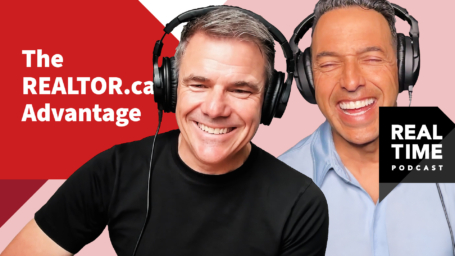
The REALTOR.ca Advantage with CEO Scott Neil
SUBSCRIBE





With more than 600 million visits and roughly 120 million unique visitors each year, REALTOR.ca is Canada’s No.1 real estate platform*. It’s a trusted, professionally-backed marketplace where Canadians can search for homes with confidence. For REALTORS®, it’s one of the most powerful tools available to support their businesses, connecting them with motivated home buyers, sellers and renters, and generating valuable leads. Now that REALTOR.ca has transitioned to a separate for-profit entity, still wholly-owned by CREA, what does the future hold for the platform, REALTORS®, and the home buying journey?
In his very first podcast appearance as REALTOR.ca CEO, Scott Neil joins this episode of REAL TIME to talk about the importance of putting the consumer first, why it’s crucial to keep innovating in the proptech space, and why REALTOR.ca is well-positioned to stay ahead of the game.
*Based on market share. ComScore, 2025
Listen on your favourite podcast app
Episode Transcript
Scott Neil: We're the only professionally backed real estate marketplace in Canada. Our mission is to help Canadians make confident housing decisions.
Shaun Majumder: I just learned a new term, PropTech. As an actor on film and TV, sometimes I would assume that that means a little robot is going to come and bring you your props, your wallet, your pen and paper, the money. No, that's not the case. "Property tech," it's this new hype word, and it's everywhere right now. People are looking for the latest technology to research, to manage, to buy and sell properties.
Of course, for most Canadians, their go-to PropTech platform is REALTOR.ca. Did you know that REALTOR.ca is now a for-profit company? They need a new CEO. Today, we're talking to that CEO, Mr. Scott Neil. He is a dog-loving cyclist who is bringing vision and experience. He's going to tell his entire story today. It's a great conversation, so buckle up. Here we go. Scott Neil, how are you, buddy?
Scott: I'm good, Shaun. How are you doing?
Shaun: I'm doing great. I understand you have a golden retriever, and I don't see any golden retriever hair on your dog. Do you love your dog?
Scott: I love my dog, but yes, it's surprising. I'm wearing a black T-shirt, and I don't think there's a speck of fur. Didn't even use a lint brush. Here you go.
Shaun: Oh, nice. Now, I've been using a lint brush here in Nova Scotia for all the wrong reasons. That's to find ticks. I've been finding ticks. Just a little tip for--
Scott: It is.
Shaun: -everybody out there, hot tip. You can use a lint brush to find ticks on your body and your dog. A little side thing, but we're not here to talk about ticks. We're here to talk about REALTOR.ca. We're here to talk about all kinds of stuff. I know nothing about you, man. You got to tell me about yourself. We're going to get into some more personal stuff later about who you are, what do you like to eat, all that. Right now, tell me about your journey, how you got here to be the CEO of REALTOR.ca.
Scott: Yes. I think like most people, when you're young, you have a certain vision of what you want to do. In reality, it never goes that way. When I was going into post-secondary education, one thing I was really interested in was advertising. I thought, "Oh, man, I want to work at an advertising agency, do something really cool and creative." This was a long time ago.
What did I do? I ended up going to university and studying political science. Then I also got a marketing diploma to go along with it. How those two things are connected, God only knows. I have no idea. I started my career in more of a traditional marketing capacity, working for a large retailer, Sears Canada at the time-
Shaun: Ooh.
Scott: -who no longer exists.
Shaun: The Sears catalog, classic.
Scott: Yes, classic stuff. That's actually where I started my journey in terms of the internet. This is, we're talking, I would say, late '90s. I was super interested in technology. I just kept putting papers about e-commerce on the national manager's desk. "Hey, this stuff is cool. We should sell stuff online." Then I became an internet marketing specialist as part of that. One of the first in that organization. That was cool. I got to combine a passion with the skill that I had, which was awesome.
Then from there, a former girlfriend of mine at the time showed me an ad in The Globe and Mail for Mercedes-Benz Canada, who was looking for somebody to lead internet, as they called it. I was with Mercedes-Benz Canada for five years. I started there in '99. This is pre-bubble, internet bubble, all that kind of stuff, which was pretty cool.
Had the opportunity to build out the Mercedes-Benz Canada website, dealer websites. A lot of the tools that are commonplace today when you're buying a car, like car configurator, comparison, all those things. Very cool opportunity. I think in a German car environment, which tends to be very conservative, I had a lot of autonomy because nobody else knew what was going on. They were afraid of the internet. I had an amazing opportunity at a young age to do some really cool stuff.
Shaun: Did you have to learn code? Did you have to learn how to build websites? I know that wasn't necessarily you. You had a team. Were you having to fill your brain with that knowledge as well, or did you just go say, "Hey, I'm going to use my 300-baud modem and send a message to somebody on BBM, BBS, whatever," and post it and say, "I need you to come and use your coding skills?" Did you have to fill yourself up with all that knowledge as well?
Scott: I had some tech chops. I could do HTML and I could understand the concepts and everything. I had enough technical skills and abilities to be dangerous, but not to build anything. I had a team who did that. I think one of the highlights of that role, and to be honest, my career, was the tech that we built at Mercedes-Benz Canada was very unique. We had the opportunity to sell that tech back to the head office in Stuttgart, Germany, and then that tech was implemented in 19 smaller markets across the world. I traveled to Singapore, where we launched it first. Young guy, huge impact, big opportunity. It was very cool at that time to do something like that.
Shaun: Coming out of this amazing journey where you're leading the charge, you're launching in all these markets all over the world, why would you ever leave?
Scott: It's a funny story, and it's a personal story because I met my wife at Mercedes-Benz. My wife worked for me. We decided that it would be best if one of us left if we wanted to be together, just to do the right thing from a corporate point of view. She had only been there, I think, two years, so I decided to leave and do something else.
Shaun: So thoughtful.
Scott: It's a love story, really.
Shaun: It's so thoughtful and selfless of you.
Scott: I know. I know. That's why I left Mercedes-Benz after five years.
Shaun: Wow.
Scott: It was a tough decision because I loved the job. It was a very cool brand to work for. I had a car and all that kind of good stuff, so it was good. On to different things and experiences. Complete 180, I went to Microsoft. I don't know if you remember. Remember back in the days when portals were big, like MSN and Yahoo and stuff like that? MSN was Microsoft. I worked for MSN, and I was a product manager. This is back into the heavy tech, defining what the experience is that you're going to build. My responsibilities in the big MSN were automotive and games. How fun is that?
Shaun: Interesting.
Scott: You have basically two channels, which are people are passionate about gaming, people are passionate about cars.
Shaun: Wait, that sounds like two very different buckets to have to manage. Were you developing product for the automotive sector that would be integrated within the cars?
Scott: No. It was more so if you think about the experience of going to MSN. If you go to MSN Autos, what you would do there is read and research articles and stuff like that.
Shaun: I see.
Scott: There'd be tools to help you decide what car to get.
Shaun: Got you.
Scott: There'd be fun lifestyle type of stuff. I had journalists and editors reporting to me, which was very cool to understand a little bit of that side of the business, which I had no exposure to. Then working on defining what the product experience would be on MSN Games and MSN Autos. What was, I think, culturally super different about that experience-- This time that I really enjoyed at Mercedes-Benz where you're suit and tie every day. Casual Fridays is a suit-without-a-tie kind of thing. Going to MSN and dudes are wearing flip-flops, backward ball caps, shorts.
Shaun: Stop, man.
Scott: Also, from a cultural point of view, it's not about hierarchy or anything. It's about the idea and your opinion. Everybody has the opportunity to contribute, and everybody's idea can be a good idea. It doesn't matter if you're the VP or if you're a product manager.
Shaun: Did that align with who you are as a person, or-
Scott: 100%.
Shaun: -were you feeling a little more like, "I need the hierarchy. I need that hard structure from Mercedes"?
Scott: I would say I found who I was there.
Shaun: Oh, I love that.
Scott: I think I've brought that into all of my management philosophy going forward, which is really about-- equality is one aspect of it, but it's really about providing people accountability and responsibility to own their own domain and have an impact. With that level of authority comes the need to be accountable to it as well. That's a big part of how I think about managing and operating a business.
Shaun: That's amazing because I think there has been a shift on a culture side when it comes to corporations and teams and working together. There seems to be a little bit more of a shift away from the older way of thinking to now being a little more community individuals who have ownership of their own path within an organization. Now, because it sounds like it's formulating inside of you as a value, a core value of how you operate, did you find moving through other organizations, and we'll hear about your next steps, but was it easy to implement that or did you find the friction when you move forward? That's a big shift in observing everything as a whole.
Scott: For sure. I think it's like a natural segue to the next position, which was back in automotive, working for a great brand called Autotrader. I was director of national marketing at the time, so a little bit away from product, more on a national marketing scale. Huge opportunity to implement digital across that organization in doing some really cool stuff and wind down the print piece. It was good, but it was a little bit different than what I was used to and what I enjoyed at Microsoft.
Shaun: Then from there, where did you end up?
Scott: Then I spent the next 14 years, unbelievably. I started at Kijiji in 2011,-
Shaun: Oh, cool.
Scott: -built up that business. Actually launched a real estate rentals business for Kijiji as well. That's where I got my first taste of real estate. That was in 2013, so expanded across the verticals in Kijiji, which was very cool. The roles that I had with that organization or the parent organizations over time really were an incredible opportunity.
In 2015, my wife and I moved to Berlin, Germany, to work for one of our sister classified marketplaces at the time called eBay Kleinanzeigen. Spent three years there basically building out all the monetization. There's real estate, automotive, pro services, and stuff like that. That was a really cool experience because you move to a different not just physical location but different culture. You're like, "Hey, whatever I've done that has been impactful or successful, will it work over here? Will it work in a different market?"
Shaun: What did you find out? What did you find out going across-- Germany, Canada, there's a lot of alignment there, but consumers are consumers.
Scott: I think the biggest thing was maybe two months in, I did an offsite meeting with my team, talk about strategy and all this. We're all sitting there. There's maybe, I don't know, 20 people. I'm at the front of the room presenting whatever I think is brilliant. There's no reaction. It's just stone-cold face. I think all of us, at least me, for sure, I'm always looking for those non-verbal cues to see if people are grasping it. Do you get it? Do you agree with it? Whatever. I actually paused, and I said, "Hey, I just want to do a pulse here. Am I blowing it? Is this good? Is this bad?" They're like, "No. No reaction means it is good."
Shaun: Wow.
Scott: You learn things like that. Like what to expect and how people react differently. The Berlin experience, personally and professionally, I would call it profound. We traveled everywhere in Europe, like every-weekend kind of thing. Then from a business point of view, the impact was just incredible. That business is still, it's a rocket ship. It's absolutely huge.
Shaun: You go through Kijiji, you help build that out and other partners around the world. You said that was the first experience with real estate in terms of really diving into that arm of Kijiji. How did that inform you to where you are now?
Scott: It's super interesting because I think back in the Kijiji days when we launched rentals, what was really impactful to me is you're really helping people with a very important decision and a very fundamental decision about where they live. I think there's a purpose behind that that I can really attach myself to that is, I think, bigger than the business itself and making money. I think that's really cool.
Again, another one of my philosophies is, I think, in the role I have now, I'm monetizing REALTOR.ca, but that, to me, is an outcome of all the other good things we do. I learned this over the course of my career as well. If you think about building the right product experience, helping people be successful in either renting their apartment or home or being a renter, if you can make money by making that successful, then that's a win, but if you're just trying to monetize the experience and just greedily make money without producing a good experience, that's not good for anybody. Everybody needs to win in order to make that a sustainable thing.
Shaun: Right. It sounds like there's places or organizations that may be so focused on short-term revenue, immediate, do whatever we can, profitable, profitable, profitable, versus a holistic approach of, "We need to care about the people who are really involved in this, the customer, the consumer, the operator of all of this." That sounds very Canadian. It feels very Canadian to think in those ways. Did you find that that is something that makes it uniquely Canadian?
Scott: I think so. I agree with you. That's a very Canadian philosophy or way of behaving or thinking. At the same time, eBay and their subsequent owners of Kijiji, as it's been sold a couple of times, I would say that was kind of a point of conflict is, you're a publicly traded company, you've got quarterly targets to hit come hell or high water. There comes some friction there. Like I said, Kijiji is a great business. I'm a big supporter of Kijiji. I'll always love the brand. I think over time, there was a big focus on short-term profitability, and the business was very successful that way at the cost of some of the long-term sustainability.
I think specifically, as you saw Facebook Marketplace come into Canada around 2017, 2018, as they started to build and get momentum, I don't think Kijiji was really prepared to compete on a head-to-head basis. Kijiji is still there. It's still got lots of traffic and buyers and sellers. I think had we spent more time thinking about the long-term and sustainable business and the money will come, I think it would be in a different position. That's a huge thing. Again, another lesson that informs me when I think about REALTOR.ca.
Shaun: Man, what an amazing journey to get you to where you are right now. How long have you been in this position? Not long, right? Relatively?
Scott: It'll be six months in a couple of weeks.
Shaun: Oh, brand new. Baby.
Scott: Brand new.
Shaun: Welcome.
Scott: I'm a baby.
Shaun: All these skills, all these value sets that are flowing through you now, you have great perspective, you've been to raves in Berlin, now you're here. Talk to me about, first of all, how did you get the call? Did you make the call? Were you the one who was reaching out? How did that all come to be? Then let's get into REALTOR.ca.
Scott: Luckily, I got contacted and had a couple of conversations. I was like, "Wow, this is really interesting." First of all, I use REALTOR.ca all the time. This is true stuff. The brand, the reach, amazing. What I learned was, hey, we're separating off REALTOR.ca to be a for-profit entity. The only shareholder is CREA, so we're still owned by the REALTORS®, which is amazing, but we have the opportunity to monetize the business and basically invest back in the business to improve the experience for REALTORS® and consumers. I'm like, "That's pretty cool. That's a very interesting opportunity."
The other part about the opportunity that is very rare in the Canadian tech space is to have a property, website, and so on, where you control everything. You have all the means of production. You build the product locally. All the decisions around the strategy are made here. In contrast, if you were to work for a Facebook or something like that and leading that business in Canada, you're primarily sales and marketing and PR. This opportunity is very rare, very unique with a huge brand. I got super excited about it. We had a couple of meetings, did a business case, and then I was luckily asked to join back in, I think it was end of October of last year.
Shaun: That's amazing. You took it. Where were you living at the time?
Scott: We were living in Huntsville in Muskoka. We were living where we thought we would live forever. We had built this place on the lake and living lake life and commuting into Toronto every week.
Shaun: Kids, no kids?
Scott: It was pretty nice. No kids. Just a big dog, and that's it.
Shaun: You can't leave there. What are you going to do, sell your house and move to Ottawa somewhere? What are you going to do?
Scott: Yes, well, that's exactly what I did. When we were talking about the role, it wasn't a requirement to relocate to Ottawa, but I felt really strongly about doing so for maybe two reasons. One, which is to really show my level of commitment that I was all in, and I wanted to demonstrate that. Right off the bat, I said, "If we're doing this, I'm moving to Ottawa."
The practical reason is a lot of the team is here. We're like a hybrid type of workforce, so people are in the office a couple of days a week. We're in the same building as the Canadian Real Estate Association, so there's good stuff happening there as well. I wanted to be here. Yes, that's exactly what we did. We listed our house for sale on Halloween, and we sold it Christmas Eve. We had three competing offers at 5:00 PM on Christmas Eve and sold our place in Huntsville.
Shaun: That's pretty amazing. Immediately, you're engaged at REALTOR.ca, you're listing, you know your listing is on REALTOR.ca, and then move. Tell me about that experience with selling. How close were you? Was it easy to use? What was that experience like?
Scott: We had an amazing REALTOR® who we selected. Why were they amazing? In short, they took care of everything. They did some minor staging, the way they marketed the property. Everything was just hands-free for us and completely taken care of. I remember seeing the sign on the front lawn before the house was actually on REALTOR.ca. There was a little sign on top that said, "Coming soon to REALTOR.ca." I snapped a photo of that, and I sent it to the team at REALTOR.ca. I said, "I'm not the only one coming soon to REALTOR.ca." Dad joke.
Shaun: That's a great dad joke, dude. That's great.
Scott: The market for a lakefront property at that time of year is not the best. Ice is coming, all this good stuff, if you don't like winter. We had a lot of demand, a lot of showings, and so on. When Christmas rolled around and we all of a sudden had three offers, it was pretty incredible. Our REALTOR® really guided us through that negotiation. That's something that we just wouldn't have been able to do to get the most value for our asset. Super excited about that. It made for a great Christmas, holiday, and New Year's.
Then January 5th, I'm on the ground here in Ottawa, and our house is closing, I think, January 19th. My wife is back preparing for the move and all that kind of stuff. I'm here alone in an Airbnb getting ramped up. I go back to Huntsville two days before we close to sign all the legal stuff. I'm in my kitchen looking out at the lake and the snow on the ground. I look at my septic cover because we were on a septic tank, and there's some brown residue around the cover. You can see it's contrasted with the snow. I'm like, "What could this be?" Then we figure out that we basically need a new septic a couple of days before we're going to close.
Shaun: Oh my God. That would be red flags all around. Was there a panic that set in? Were you like, "How am I going to manage this? Who's going to take care of this?"
Scott: Extreme panic. I don't know what to do. We're calling our septic guy. He's three hours away. He can't come. I sent him a video. He said he thinks it's this. We're like, "This is not going to close. The deal is going to fall apart." We called our REALTOR®. She calmed us down. She's like, "We'll deal with this. It's fine." I think that was the thing that really relieved us, is immediately she's dealing with the lawyers. She's dealing with the buyer's agent. Within 24 hours, we had this sorted out. Small abatement later, it closes. The money is in our bank account. We're off to a new adventure in Ottawa.
Shaun: Oh, wow. That was a scary turn there for a second. What I find interesting about that is the importance of-- all of the people watching this right now, they're REALTORS® and so the human element to this is so important. There's a bit of a cross-pollination here. We've got the new tech. Everything is happening. REALTOR.ca is growing. However, you cannot do it without having those individuals who are at the helm, the REALTOR®?
Scott: 100%. I think REALTOR.ca does a lot of the heavy lifting around the marketing and exposure of the property and the online experience with the virtual tools and videos and so on, which is really cool and, as a consumer, very helpful to inform you and educate you on what you're looking for. Obviously, in situations like this, what do you do without that person who has seen this before and can guide you through it and make sure that it closes? I don't know. The intersection of technology and humans is like a core theme for me. In this example, if you think about things like AI, that intersection of those two things, humans and tech, is super important.
Shaun: Amazing. You sold your house. Now, what about buying?
Scott: Funny story is we weren't sure where we wanted to land in Ottawa. I wanted to experience what a neighborhood is like. We rented at first, and then we decided, pretty early, we know where we want to be. We ended up, just a couple of weeks ago actually, working with another great REALTOR® here who really helped us understand the neighborhoods.
My wife is on REALTOR.ca all the time looking at possible houses, going back and forth with the REALTOR® saying, "What do you think about this? What do you think about the street?" The REALTOR® is taking us through all these properties. She's asking us questions that my wife and I never even had discussed in terms of what we think and how we feel. It was really helpful in helping us, my wife and I, align on what we were looking for in our next property. That was great. We ended up buying the place, and we actually move in in-- we get possession a week from today, I think.
Shaun: Oh, wow. This is amazing. We are living inside of this tornado, and you're about to be set down on hopefully an evil witch, and that will stop all the madness that's been happening in the world.
Scott: That's right.
Shaun: That's amazing. You're feeling like now you're in transition, you're getting settled. You talk about the intersection between human and tech. I've been hearing a lot about this word PropTech. Explain to me what PropTech is. Is that something to do with human and technology intersecting? Tell me about PropTech.
Scott: It's a cool term for something that is very simple. It's basically, again, I'll use "intersection" again, but it's the intersection of technology and the real estate business, basically. It's that simple. The same thing if you think about the term "fintech" is the intersection between technology and finance and banking.
Shaun: There it is. Thank you for clarifying. Some people may know, some people may not. Listen, I want to get into some personal stuff, but I think we've talked a lot about the personal. I really want to hear now about REALTOR.ca, where it's going, what your vision is for it. It's such a unique platform. Talk to me a bit about that because you're still in the midst of shaping this vision. It's not all set in stone, right?
Scott: It's very early days. It's early days, yes, for sure.
Shaun: Right. You're bringing with you all the values, all the core values, all your philosophies, your management philosophy, plus all that tech knowledge that you bring, the marketing. How does this all funnel in to REALTOR.ca, monetizing REALTOR.ca? Talk to us about that.
Scott: I think the best place to start is the mission. Our mission is to help Canadians make confident housing decisions. It's a pretty simple phrase, but it really does a lot of work. It means a lot. When I think about it, where REALTOR.ca is right now, we're great in the discovery. Hey, what do I want to live? What kind of place do I want to look at? What are the prices? What do the photos look like? Down to when you're in the buying or selling phase to really helping you select and be more educated as you work with a REALTOR®. We're great at that.
Where we have a huge opportunity is throughout the entire housing journey to really help consumers make really good choices for housing. I'll give you a couple of examples. First, if you think if you're a first-time home buyer, maybe the first time you bought a house or I bought a house, I knew nothing. The REALTOR® is definitely there to help you make some good decisions.
I think with the advancement of technology, you can leverage tools to help educate yourself. You're making the right decision. Are you going into a neighborhood that is right for you, for your lifestyle, and so on? Is it a good financial decision for you? As you start getting into real estate, that really can set the path forward in terms of a lot of impact on your finances in the future. That would be one example.
Then as you think about beyond just the moments of buying and selling, this whole aspect of moving into a property or living in the property for all that time, there's all kinds of things that REALTOR.ca can support the consumer with throughout that. This is everything from renovations to property maintenance to lawn care, landscaping, all of these kinds of services that are really beneficial to someone living in a house.
With that, we can keep the connection with that consumer over that journey and hopefully keep them connected with their REALTOR® as well so when it comes time to do the next purchase or sale, we're there, and everybody is there, and we're connected, and we know a lot about that consumer and what their habits are and what they're looking for.
Shaun: That's amazing. I think the majority of people in Canada, when you go to your REALTOR.ca, you're not spending a lot of time on REALTOR.ca unless you're in the market buying or selling. What you're saying is, in terms of the vision, the long-term vision, is that, no, as somebody who has now purchased a home, throughout my homeownership journey, there's going to be value in going to REALTOR.ca not just to see, "Oh, I want to get a check on the market in this neighborhood. Are they selling? Buying? What is the value? Is it going to happen?"
You're saying it's going to go beyond that and it's going to be a much more active-- there's great value in me going there when it comes to renovations, knowledge in general about making confident decisions about where I live and how to make my house even better.
Scott: Yes, that's exactly it. We have a sizable audience who is, to your point, coming to the site to see, "Hey, what's the neighbor's place look like that got posted," or just to monitor the market. Those folks who are living in their house, we can be so much more to them than just what is the neighbor's house selling for, what does their kitchen look like. We can provide much more for those users over the course of their journey. I think the big thing is really expanding the scope of REALTOR.ca to create more value and be the place for all of your housing needs. Buying and selling, of course, incredibly important, but also living.
Shaun: Explain to me, walk me through what some of these tools might be. I'm a consumer. I buy my house. Now I'm four years in, or I'm two years into my house, and I'm like, "Why would I need to go back to REALTOR.ca?" What are some places to go on REALTOR.ca that you envision will be tools that I can use?
Scott: One that I'll start with, which is really in the buying and selling moment, is earlier this year we announced a partnership with RBC around mortgages. You could think this is just about coming and being redirected to RBC to start a pre-qualification or to get a mortgage. It's definitely part of it. RBC is a very trusted brand.
In addition to that, again, aligning to our mission about confident decisions, there's all kinds of education and expert advice that we're co-authoring with RBC that helps inform users about what kind of mortgage and what are the implications of this that are really helpful and I think very different to other websites and how they think about connecting a user or a customer with financing their home. That's one example, very much in the journey.
If we want to think about some of the future things as you go through the cycle, one is around services around moving. You've decided, like us, you've got this property, you're going to move. Can we connect you with a great moving service? You come to REALTOR.ca, and you find that mover. Further down the road as you're living in that property, maybe you've been there for three or four years, and you're like, "I always thought we could use a deck out back and maybe a hot tub and a sauna and all these things." We could connect you with those partners who will be trusted and be able to provide those services for you.
Again, throughout that journey, everything that you need will be connected. Then I'd say one other thing that is an interesting opportunity is if you think about maybe you're considering, "Should I renovate?" or "Should I move? What are the options?" If we can provide you with expert advice around what are the implications of moving versus renovating, or should you do something to your property before you put it up for sale to get the most value for it? These are all of the things that I think the number of ideas, partnerships, and integrations are basically limitless throughout this whole process.
That's what I think is really cool about this opportunity. Aside from improving the core house-finding experience, which we're going to do, the opportunity to try different things like mortgages, for example. "Hey, does this resonate with our users? Is this cool?" Right?
Shaun: I think the demand is going to be there. You got me excited about that idea. I think that an idea people are going to want and to know if they can go to this, go to REALTOR.ca, and I can do just about everything from there, how can that not be of great value? Yes, the question of trust because we live in a world online where it's hard to trust the internet, generally speaking. Yes, you've got your work cut out for you, but I think that vision is something that I'm excited about as a homeowner in Nova Scotia now, absolutely 100%.
Scott: Very cool. Well, I think just to the point about trust, and I think I'll call it our unfair advantage, is that we're the only professionally backed real estate marketplace in Canada, meaning we're owned by the REALTORS®. That's fundamentally a very different approach than competitors in this space.
Shaun: Right. Competitors in this space, compared to us, to a REALTOR®, what would you say is the biggest difference there?
Scott: Well, I think fundamentally, we have an obligation to deliver value back to REALTORS®, which is one of our core strategic pillars, and that comes from really doing the right thing for the consumer. Doing the right thing for the consumer is going to deliver value back to REALTORS®. Our mission is very much user-centric and very much delivering value to REALTORS®, and then from that comes commercial opportunities and the opportunity to make money.
Based on my past experience working on other marketplaces, it might be the other way around, where the objective is the money, and basically, how do you monetize the user? I think that order of operations is super important philosophically.
Shaun: Prioritizing, yes, it makes a big difference. You said REALTOR.ca, it is the only professionally backed marketplace. It is the absolutely most visited website when it comes to consumers trying to find homes or sell their homes. If it is so wildly popular, it's so ahead of everybody else in terms of visits and clicks, why do more? You're already there. You're in the pocket. Why innovate?
Scott: Consumers' expectations are constantly changing and evolving and expecting more. If you think about just yourself in the last 10 years and the technology that's available to you now versus 10 years ago, just look in your pocket, look at your phone and what it's capable of now versus what it could do 10 years ago, and subsequently, every new iPhone that comes out seems maybe even somewhat disappointing because you're so used to this massive evolution of technology.
The big thing is customers have different expectations and demands, and we need to keep up with that. Then the second thing is the competition doesn't sleep either. They're looking for new ways to acquire users and build new experiences. We can't just rely on the fact that we have this great market share now. We have to earn it every day, and that's something that is very important for us. Then last thing about technology, if you think obviously we couldn't have this conversation without talking about AI and the opportunity that we have to leverage AI in a number of ways in a [sound cut]
Shaun: How will you incorporate or how will it incorporate itself? Without our permission, it's just going to take over. I'd be like, "No, no we got this, Scott. We got it. I'm AI. I got you. Don't you worry about it."
Scott: That is a key, key, key point when I mentioned about responsibly integrate AI into what we do. That's key. That comes back to trust, one of our core values. I think about AI in three ways. First, internally here at REALTOR.ca, how we can use AI to work better. How can we be more productive? How can it help us and do that responsibly? That's pillar 1. The second one is how can we use it to improve the user experience, reduce friction, help them find what they're looking for, personalize the experience. That's on-site, which you would experience from REALTOR.ca.
Then ultimately, that will deliver better insights and value and higher quality leads to REALTORS®. Then all of this is underpinned by governance and responsibility of AI and customer data privacy; all of these kinds of things are paramount when you think about AI. Those are the three ways that I think about AI. We can get into maybe the experience side or how we work with it a little bit. That's the way that I think about how we're going to leverage AI.
Shaun: Do you see there being an interface with AI through REALTOR.ca? If so, how are you going to counter that instinct for me to be like, "I want a person"?
Scott: Yes. There's definitely going to be people involved from a REALTOR® point of view. This is, again, that intersection of technology and people where I think we're very uniquely positioned. I think your latter description of the experience that you would like is very much aligned to how I think about it. How can it be helpful? How can it personalize the experience? When I think about chatbots, I'm totally going to age myself. If you remember working with Microsoft Word back in the '90s, they had Clippy, the paperclip that would come up, "Hey, it looks like you're trying to write a memo." They were just so annoying.
Some of the chatbots are the modern version of that. I think why they're annoying is they're interfering and interjecting themselves into the experience on their own as opposed to having it being user-initiated. I think having the user in control of how they want to leverage the AI tools that we offer, I think, is one thing that really reduces friction. Then two, the more that we can customize and tailor the experience based on the individual user will be helpful as well.
We can leverage AI to use that to do that. Then maybe the last example that I would give is people like to search and discover properties in different ways. Some people are more visual. Some people are more data-oriented. If you think about all the photos that come into REALTOR.ca, if we're able to determine, say, the interior design or the exterior design, you say, "Hey, I want to search for properties that have a mid-century modern exterior from the 1970s."
If we can use AI to identify all those properties that have that and do that through a visual search, just flipping through photos, that's a really cool way for someone who's visual and very specific about the look and feel of what they want to buy in terms of a property.
Shaun: Yes, I think that's amazing. AI has such incredible potential in this space, in my mind. I think about if I'm worried about crime in an area, or if I'm worried about schools, or if I'm worried about-- AI can paint a really compelling picture that is not just the data. It actually can tell you a story about the place too, about a region, about an area, about some interesting-- It's very exciting. I really hope you lean into the AI. I just would hope that it's going to be used in a way that-- It sounds like it is, but it's such a great opportunity. I'm stoked to hear about that.
Scott: Yes, again, back to the responsible implementation and use of it is core. It's fundamental. REALTOR.ca is such a well-known brand with such a reputation for quality and neutrality, and that's something that we really need to protect as we continue to evolve and innovate the experience. It's fundamental.
Shaun: Talk to me about that. How do you see it expanding? Because there is a slow and steady approach to all of this as well as that quick "Wow, we're sitting on something amazing." Talk to me about that in terms of how you see it expanding. What are the pillars? What are the approaches?
Scott: The thing with it is it's not AI for the sake of AI. It's thinking about what AI can do to help us achieve our goals and strategy. If we talk about expanding across the entire homeownership journey, how can we use AI to look at how people are traveling across that journey and maybe suggest the appropriate services that can help them make those decisions, those confident decisions that they want to make.
It's really not about just, "Hey, how can we throw in AI to do something specific?" It's really about how does it meet our goals? How does it help us achieve our objectives? That's the fundamental thing. The other aspect of it is when we think about anything that we're going to develop, everything is really a test and learn. We have hypotheses and theories about what's going to work. You try something. You do a small experiment. You leverage. You test it with audience. You get the data to see how it worked.
Then maybe it's not working, so you make a change to see if it can work, or it just won't work, so you throw it away and do something else. That's really how we have to think about it. Everything gets aligned back to our strategy and the mission that we talked about. Then the other piece that's not so much consumer-facing is how we think about using AI to do our work better at REALTOR.ca. That's a core thing. I'll give you a really good practical example from yesterday when I was speaking with our lawyer.
We'd done a contract with a partner, and typically what happens is, after the contract is signed, we have to execute it. There's product folks, marketing folks involved in this. Very often, they're going back to the lawyer to help interpret the contract. They'll ask you a question about this and this logo here and so on and so forth. What the lawyer did that was really cool is he wrote a custom GPT and uploaded all of the context around the contract and everything, our obligations and so on, shared that with marketing and said, "Let's test this. Start asking questions to the GPT about our implementation of what our obligations are and what we should do."
If you think about, if that's successful, the opportunity that has is the lawyer doesn't have to be the person who goes back and rereads the contract and interprets it to the business. The business can do that through the GPT with all the context. That's not super sexy, but what that is is really about productivity. That can be replicated everywhere across the organization.
Shaun: Totally. That's cost savings. There's a lot there that is mind-blowing. Now, again, going back to the human side of things, a lot of REALTORS® are watching this right now. I'm sure there's some thought about, "Hey, maybe AI within REALTOR.ca can help me with some of the leads." I'm not a REALTOR®, but I've heard some rumors that people talk about, well, sometimes you go on there, you get a lead, but it's a dead end. How can REALTOR.ca evolve and shift to maybe help where there's more warm leads that are a little more sustainable?
Scott: Incredibly important, and I think it's an objective of ours to deliver more value to REALTORS®. Last year, 2025, we delivered 6 million leads to REALTORS® from REALTOR.ca.
Shaun: Cool.
Scott: Big number.
Shaun: Good number.
Scott: Yes. That question about the quality of those leads is incredibly important. Last year, if we were thinking about that, we didn't really have a good way to understand the quality of those leads. You could do it by surveying and saying, "Hey, was this a good lead?" That's pretty cumbersome, and how do you do that on the scale of 6 million leads? Very difficult to do. If we think about AI, there's two pieces. One, from a consumer point of view, having a better prepared consumer, so they're more educated when they're working with a REALTOR®, I think makes the REALTOR®’s job easier and more effective and more successful.
Then the second thing, specifically about leads, is we should have the opportunity to provide more insight when we provide a lead to a REALTOR®. An example of that would be back to mortgage. As we start offering different services and partnerships and tools across the site, maybe we can indicate in that lead that, "You know what, this user's checked out the mortgage calculator. They've read three articles on how to finance their home." These kind of things will add more context to the lead. Maybe you could score the lead to say out of 10, how good is this lead, and how likely is it to turn into something.
Shaun: Right. That's amazing. I think a lot of REALTORS® are going to be excited to hear about that as well. REALTOR.ca is now a revenue generator. Let's talk about how that revenue generation is going to work moving forward. Also, how does that affect dues? I know that there's some conversation about dues, raising, lowering. Talk to me about that.
Scott: Yes. When we think about revenue, currently we have three main buckets of revenue. One, which is very visible on the site, which are advertising. Display advertising that you see on the site. It's very good, high-margin revenue, but I don't view that as really a strategic lever going forward. That's really about funding the journey so we can do other things. With advertising, you really want to make sure that it's not intrusive of the experience.
The second thing, which is where I see a really big opportunity going forward, are through partnerships with legitimate, trusted brands. RBC is a great example of that. We've got more in the pipe to help us with that homeowner journey. When I think about this revenue stream, it's highly strategic because what it does is it delivers value for the user, it delivers value for the consumer, and it makes money for REALTOR.ca and the partner. You've got a win-win-win. That's the best way to generate revenue because it's a sustainable revenue stream.
Then the last one is really around data. We currently have a product called DDF where we syndicate listings that are sent to the platform to other websites to provide more exposure for the REALTOR®. Different websites, competing websites, so that the REALTOR®’s listing gets to more places. We charge a fee for that. In addition to that, there's other opportunities to leverage the data on our site to empower other partners and sell that data.
Again, trust is paramount. Not about exposing any user data or anything like that, but if you think about things like insights around behaviors or likes and dislikes on aggregate in certain areas, can help other companies market their products, decide what they want to do. This doesn't create friction for the user, doesn't expose anything in terms of privacy. That's another stream that I see as being a revenue stream for REALTOR.ca.
Shaun: Right. Amazing. Then now, from what I understand, the long-term goal is to be fully self-funded. Is that correct?
Scott: That is a huge priority for me because when you talk about member dues, part of the dues that a REALTOR® pays to the Canadian Real Estate Association have historically been to operate this incredible platform. It really is a bargain, considering we have 61% market share and just such a massive reach. It really is a bargain. Fundamentally, we want to be able to be a self-sustaining business. Over time, the money that we make will reduce membership dues.
Then, as we make money, we invest that money always back into the platform. It's not going to some private equity or another external shareholder or anything like that. That's a really cool proposition that's very unique. Yes, we want to reduce member dues, and we want to continue to invest in the platform.
Shaun: I love it. Now, we've had an amazing journey today. I love hearing this. We could talk for hours, but we're coming down to that point where here you are, you've got a lot of work to do, you're still going to unpack boxes, move into your new house, and then get right down and dirty. I want to hear, what does the future of REALTOR.ca look like to you? What excites you the most? In a sea of muddied online environments, REALTOR.ca, talk to me about building that trust, again, that's so important.
Scott: The starting point to that is probably when I was going through the process of being interviewed for this job. When I was talking to my wife about it at the time, when I had the offer, she's like, "REALTOR.ca people are going to freak out at this brand and that you're going there. It's just such a crazy opportunity." She said, "One thing that you'll need to do is," she said, "the site's great, it works, but it doesn't look like it's really been evolved in the last seven years or something like that.
I think that's really the exciting part is to take something that's impactful to Canadians' lives, they use, they love, they're familiar with the experience, but it's a pretty practical experience. The opportunity to evolve that, leveraging the technology that we have, leveraging the great people who work in this building for REALTOR.ca, getting the input from REALTORS®, that opportunity to take this icon of a website and really evolve it to its next stage while monetizing it, while reducing membership dues, that's a really cool mission, and that's what really excites me.
We're going to impact millions of Canadians in a positive way from doing that. That's why I say this is like a dream, dream opportunity. It's very cool. Then I think we talked about a lot of the specifics around the experience and personalization and more educated consumers who are better prepared, who produce better outcomes to REALTORS®. There's a lot there that can happen. The key thing is this is going to be a journey.
We have a mission and a vision and a strategy. We're just at the very beginning of defining what that looks like. Even, for example, tomorrow, I'm meeting with a group of my team offsite to define some of this, like brainstorm, working session. What does the future of this actually look like in practical terms over the next three years? We're in the heart of that right now.
Shaun: Oh my God. It's so exciting. I'm sorry. I just love that. When we're at a precipice like this, whether it's REALTOR.ca or any other organization, when you're in that like, "Okay, we're going to take this, which is already great, and we're going to make it even better." I'm just curious. I know you're busy, and I know you've just signed on to do this job. Would you consider going in and stealing the coaching job for the Toronto Maple Leafs? It just sounds like your vision for REALTOR.ca, that approach to values and evolution, as a Toronto fan, I just would say, I think you could make a great coach.
Scott: Thank you.
Shaun: I don't know this new coach, but I know he's around, but I think we need you.
Scott: I think you've just subtly given your opinion of the new GM and coach, without saying it.
Shaun: It's still early days. It could be brilliant. It could all be stroke of genius. I don't know. I just love hearing your vision. Every Toronto Maple Leaf fan is like, "We need somebody with vision." Maybe this guy is. I don't know.
Scott: I'll tell you something. I'm unique in that-- I'm going to make a lot of enemies with this.
Shaun: I know you, yes. Know where you are. Know where your house is.
Scott: I'm a Habs fan. That doesn't work in Ottawa. It doesn't work in Toronto, but it have been for my entire life. However, I'm not the kind of Habs fan that if the Habs were out of the playoffs and Toronto was in it or Ottawa was in it, I'd be going for them because they're Canadian teams. I support them. It doesn't have to be a binary love-hate thing.
Shaun: Sure. That was very diplomatic.
Shaun: Scott, this has been an incredible conversation. I am so thankful to have spent time with you today. I know that REALTORS® who are watching and just regular people who are watching this, consumers, Canadians, and international, I think it's been incredibly insightful. I am so excited about REALTOR.ca in the future. Good luck, man. Good luck. I hope you're here for 14, 20 year, whatever it is. I'm sure your wife is, too. She's just like, "Okay, we just need to settle. We had to give up our hospital house. Now we're here in Ottawa." I wish you all the best, man. I'm so stoked you're part of REALTOR.ca. It's going to be great.
Scott: I appreciate it. This conversation is awesome. As you know, I'm a big fan of you as well. This has been such a cool experience. Like I said, dream job. Dream job. Just amazing.
Shaun: Awesome. Well, good luck. Thank you, Scotty.
Scott: All right. Thanks a lot, Shaun.
Shaun: All right. Cheers.
Scott: Cheers.
Shaun: Thank you, Scott. I'm bummed you're not going to be the new coach for the Toronto Maple Leafs. It doesn't matter because you're in the right position to be the new CEO of REALTOR.ca. I think REALTOR.ca is in pretty good hands with Scott. Did you feel it? You can just tell. You can tell. I'm excited to hear where REALTOR.ca is going to hear his conversation, how the consumer and the REALTOR® are front and center when it comes to everything that is going to happen with REALTOR.ca.
Thanks so much, Scott, and congratulations on your new position. Of course, if you liked today's episode, tell us by giving us a rating wherever you listen to your favorite podcasts and ingest your favorite podcasts. Today's episode of REAL TIME is brought to you by the Canadian Real Estate Association Production, courtesy of Alphabet Creative. My name is Shaun Majumder. We'll see you next time, on REAL TIME.